Story: A rare journey. A remarkable perspective. This is Sarah’s story

When Sarah describes living with Mucolipidosis Type III – an ultra-rare genetic condition that only four people in New Zealand share – she paints a picture you can instantly see:

“If you think of a nice clean kitchen, and then the next day there’s a rubbish bag, and then the next day there’s another, and another, and another – until you can’t move in the kitchen. That’s what my disability is,” she says. “I can’t break down all the garbage that builds up in my body, so it just stores in my organs and bones, and basically destroys my body.”

She says it without self-pity. Just honesty. And incredible strength.

Because despite the pain, despite the fragility, despite the barriers most people never see, Sarah has always chosen to live boldly. To live fully. To live with purpose.

ML3 is a lysosomal storage disorder that affects the skeletal and connective tissues, filling the body with toxins it can’t remove. For Sarah, it has meant a lifetime of pain, fragility, and constant challenges – but also a lifetime of choosing joy, courage, and determination.

Sarah has never allowed her disability to define her. She has never let it hold her back.

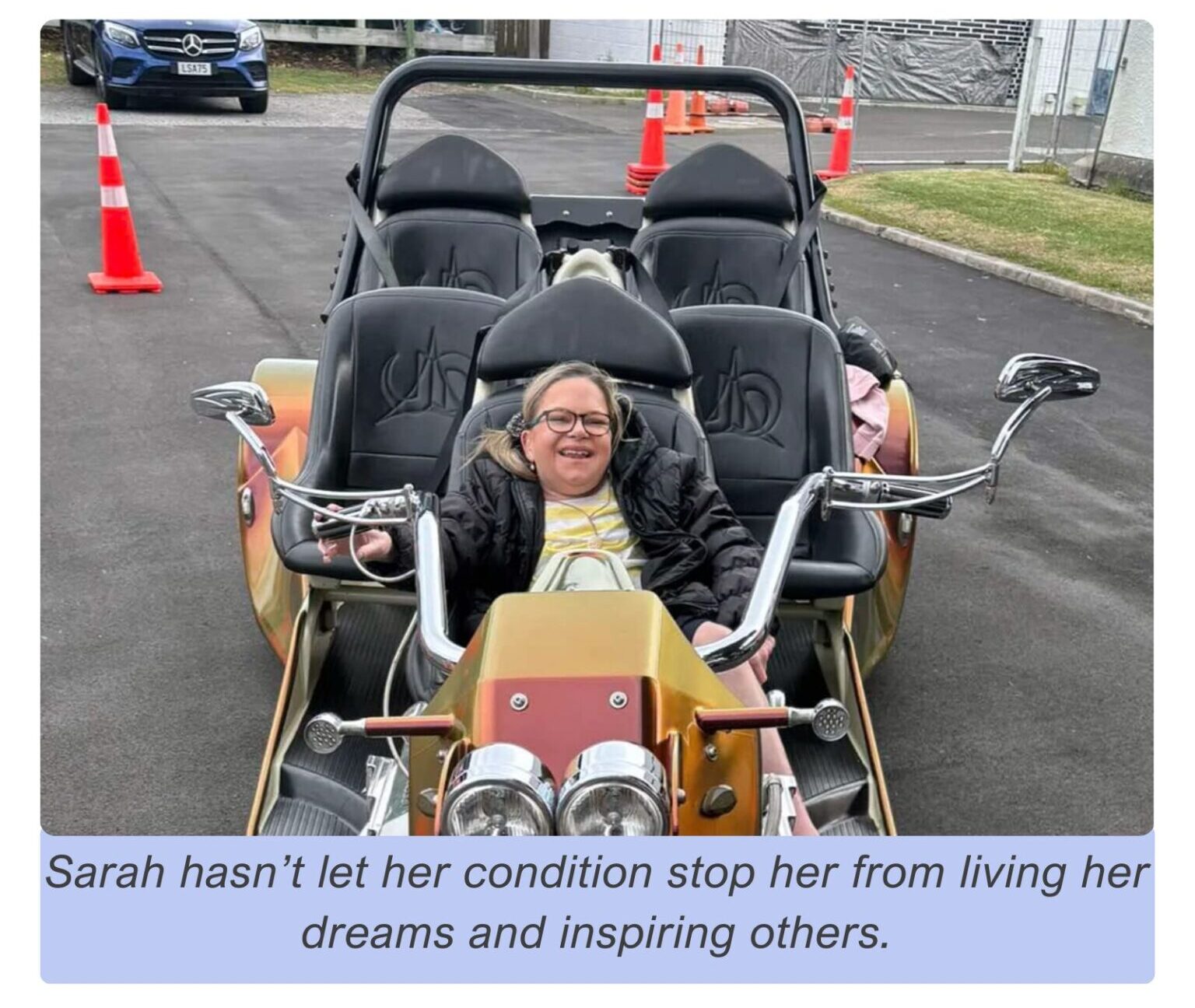
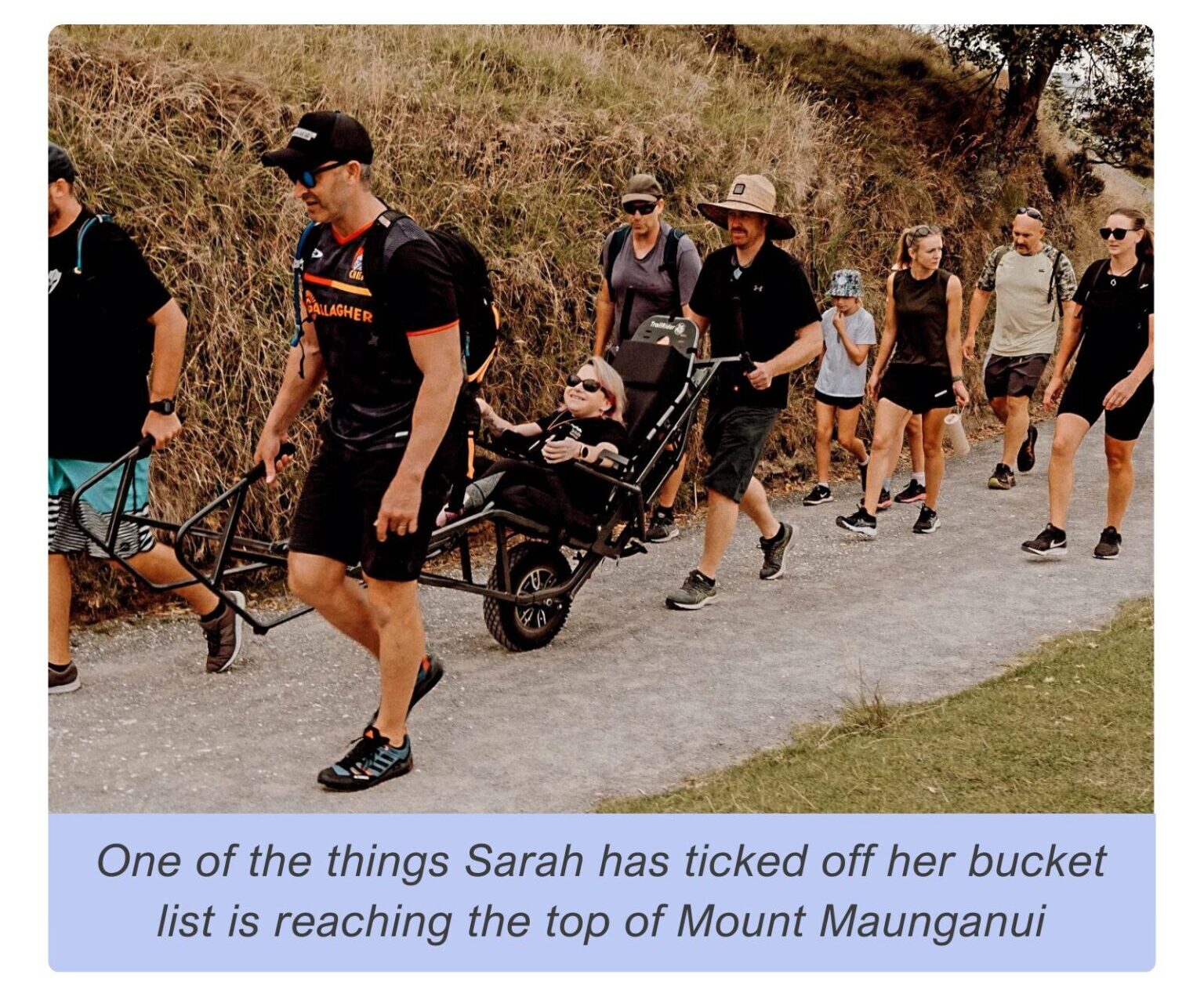
She’s raced hot laps in a Ferrari, soared above Aotearoa in a helicopter, braved the Queenstown gondola and the jet boat in Wanaka, and even climbed the Mount. And this January, she’ll celebrate her 40th birthday – a milestone proudly written on her bucket list.

It is obvious speaking to her, that Sarah’s parents raised her with one powerful message:

To accomplish anything in life, you’ve got to go and do it. Try your best. And if you fail, that’s all right – at least you tried.

Sarah lives by this and two other guiding values:

  • Be kind to each other.
  • Live your life to the fullest.

They sound like small things – but to Sarah, they’re everything.

“My purpose in life has been to inspire people,” she says. “No matter what’s in the way. I’m so happy that I can inspire people and I know that when I leave this life, I’ll be a happy woman because I achieved what I wanted to achieve and leave everlasting memories for people.”

That purpose didn’t appear on its own. It’s something her mum, Jenny, has fought for tirelessly. Jenny has spent her life refusing to accept “no” as an answer. When experts were uncertain, she researched.

Long before email existed, she was writing letters around the world, seeking specialists willing to help. She founded Cure Mucolipidosis (Cure ML) in 2001 and now works with researchers at the University of Massachusetts, who have just begun developing and testing a brand new gene therapy.

But above all, Jenny fought for her children to have a childhood, not a diagnosis.

In 1990, a Belgian specialist told her something that shaped their entire family’s approach:

“Do not wrap your children in cotton wool. Let them enjoy life for as long as they can, because pain and mobility will take that from them soon enough.”

So they did.

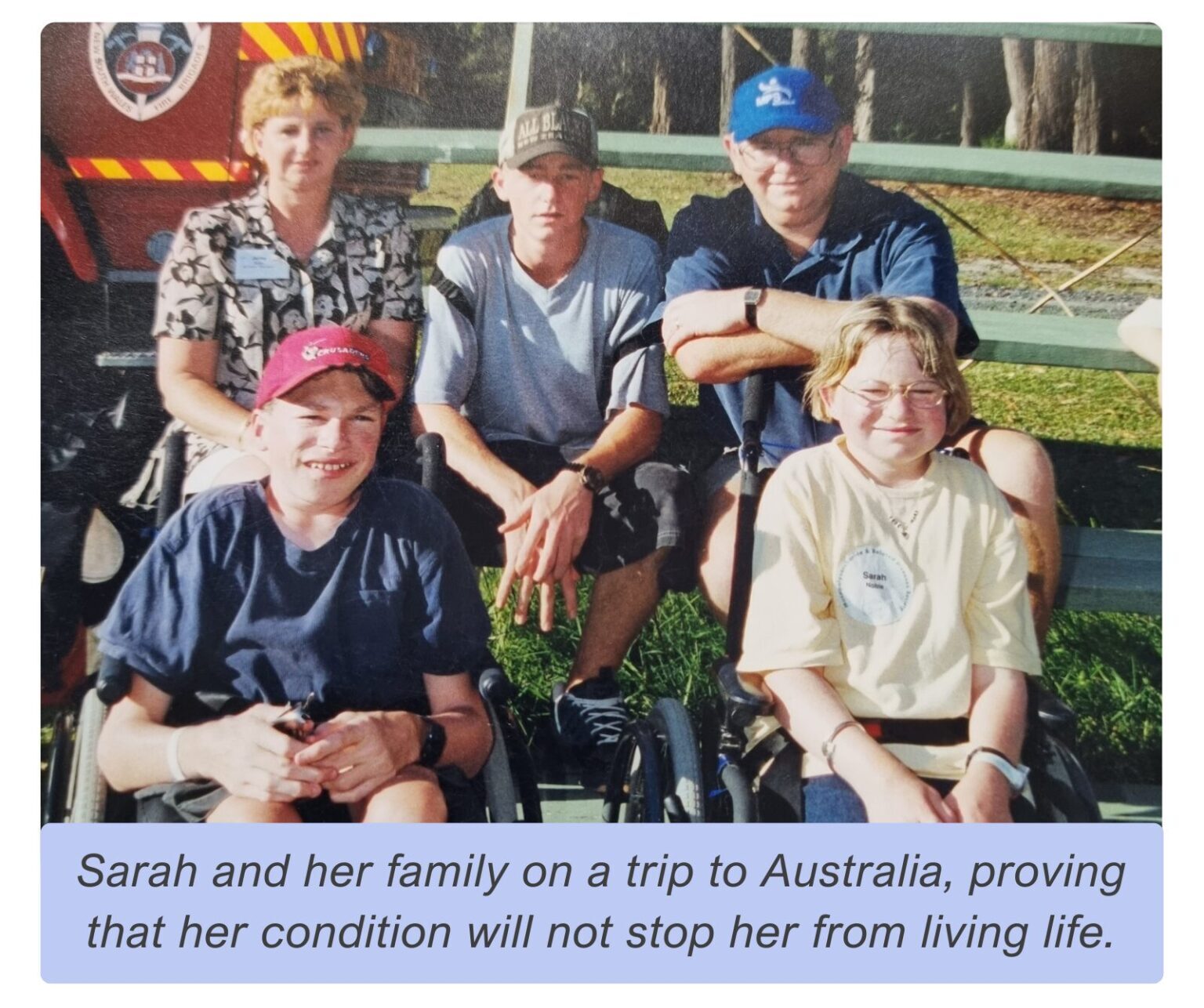
They told their children the truth as soon as they started asking questions about ML. They created memories, embraced adventure, and they lived.

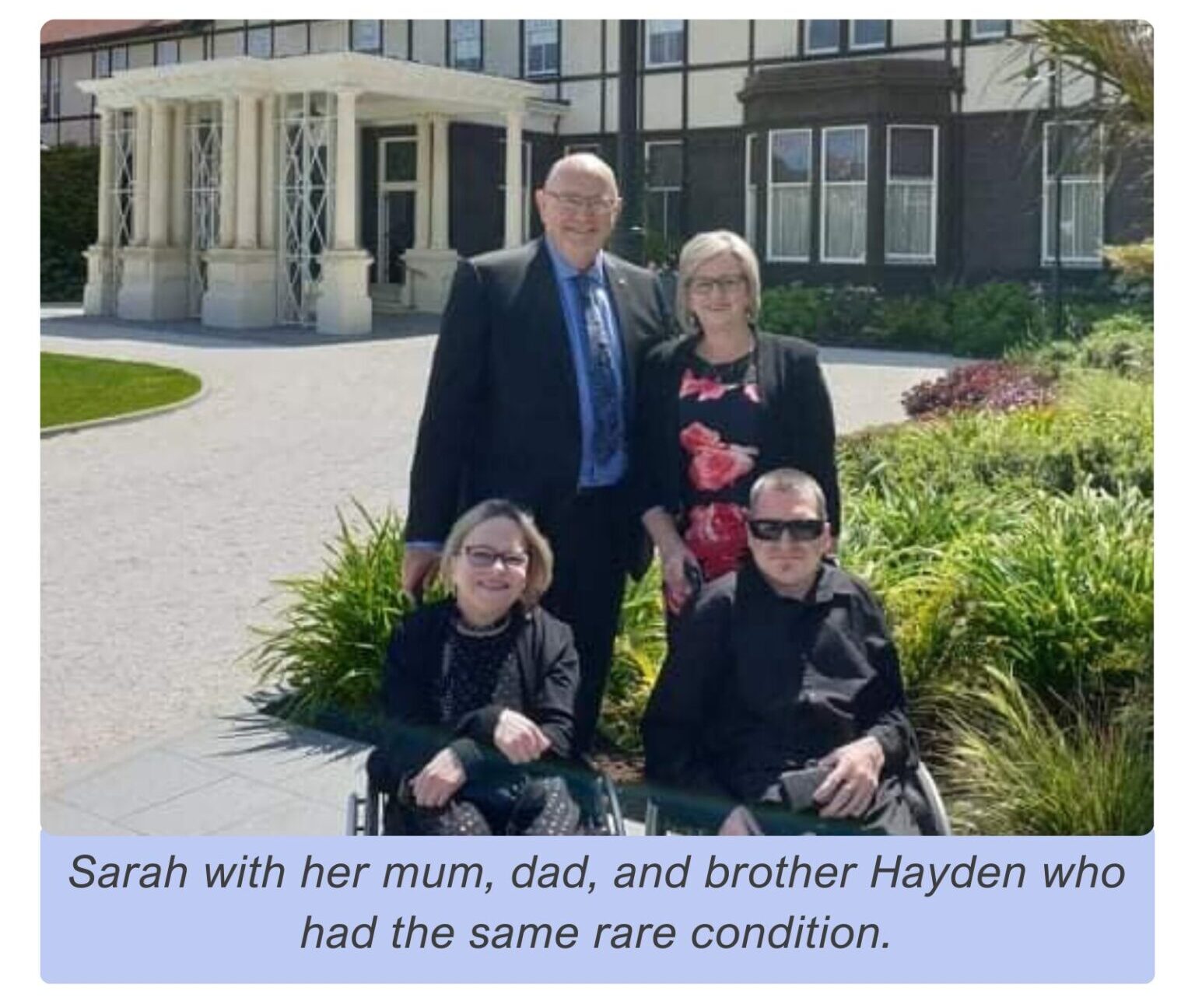
When pain eventually forced Sarah to seek support, she turned to Waipuna Hospice – a place she already knew through her brother Hayden’s journey with the same illness.

For Sarah, hospice has been a lifeline – not just at the end of life, but through life. A place that sees her not as a diagnosis, but as a woman full of fire, creativity, and purpose.

Sarah’s older brother, Hayden, lived with the same condition. When the pain became overwhelming, he made the courageous choice to go into palliative sedation. When the medication wasn’t working as it should, it was Jenny who figured out why. A research paper was written, allowing Sarah’s journey to be better than her brothers was.

Through that experience, through the heartbreak and the courage, one thing became clear: compassionate, expert pain management changes everything.

This is why hospice has become such an important part of Sarah’s life too. For their whole family, hospice has brought relief.

“I don’t know what I would have done without hospice, to be honest,” Jenny says. “Your team go over and above. And it’s amazing. People think hospice is only for cancer, but in actual fact hospice is there for pain management, symptom management, and end-of-life care. For families like ours. And it really upsets me that hospice is not fully funded, because it should be.”

Sarah’s story reminds us that while we cannot choose the challenges life gives us, we can choose how we show up for ourselves and for one another.

With your support, hospice can continue to show up for families like hers – with compassion, dignity, and care that truly changes lives.

keyboard_arrow_up